



Tirzepatide vs. Semaglutide vs. Retatrutide: Which Weight Loss Medication Is Right for You?
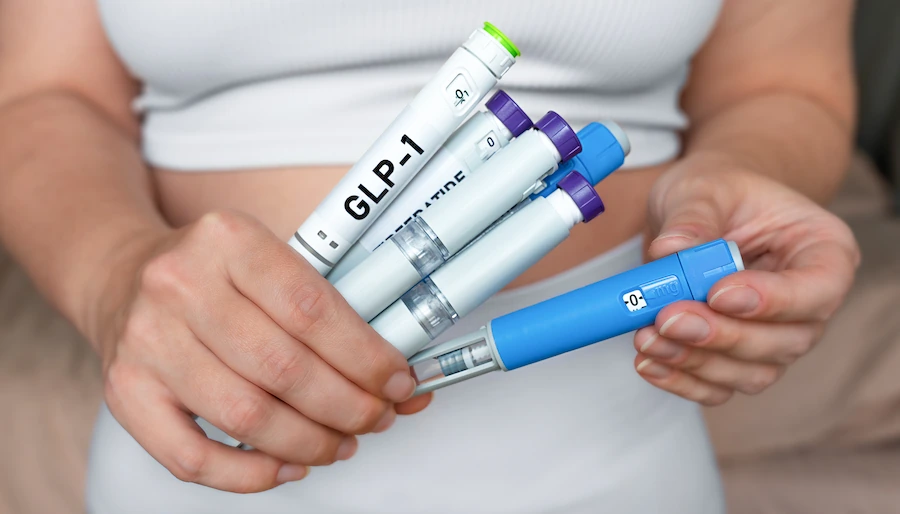
If you’ve been comparing weight loss injections, you’ve likely run into three names: semaglutide, tirzepatide, and now retatrutide. All three belong to the same family of medications that mimic gut hormones to control appetite and blood sugar — but they’re not interchangeable, and they’re not all available yet.
At St. Louis Bariatrics, we only prescribe FDA-approved medications — which currently means semaglutide (Ozempic, Wegovy) and tirzepatide (Mounjaro, Zepbound). Retatrutide is a promising medication still in clinical trials, and it is not yet available by prescription. Here’s how all three compare, and what to know about insurance coverage before you get started.
Semaglutide: The Original GLP-1 Shot
Semaglutide is a GLP-1 receptor agonist — it mimics one gut hormone (GLP-1) that slows digestion, curbs appetite, and helps regulate blood sugar.
- Brand names: Ozempic (FDA-approved for type 2 diabetes) and Wegovy (FDA-approved for chronic weight management)
- How it’s taken: Once-weekly subcutaneous injection
- Typical weight loss: Clinical trials have generally shown average weight loss of 12%-15% of body weight over about a year and a half of treatment, though individual results vary
Tirzepatide: A Dual-Action Option
Tirzepatide targets two gut hormones instead of one — GLP-1 and GIP (glucose-dependent insulinotropic polypeptide). That dual mechanism is why many patients see greater average weight loss on tirzepatide compared with semaglutide.
- Brand names: Mounjaro (FDA-approved for type 2 diabetes) and Zepbound (FDA-approved for chronic weight management and moderate-to-severe obstructive sleep apnea)
- How it’s taken: Once-weekly subcutaneous injection
- Typical weight loss: Clinical trials have generally shown average weight loss of 15%-20% of body weight, depending on dose
Retatrutide: The “Triple Agonist” — Not Yet FDA-Approved
Retatrutide is Eli Lilly’s next-generation candidate, sometimes nicknamed the “triple G” or “GLP-3” shot in media coverage — though that’s a marketing shorthand, not an official drug class. The more accurate term is triple hormone receptor agonist, because it targets three gut hormones at once: GLP-1, GIP, and glucagon.
Retatrutide has drawn attention because of early trial data suggesting weight loss in the range associated with bariatric surgery for some patients. But it’s important to be clear about where things actually stand:
- It is not FDA-approved. Retatrutide remains an investigational medication, available only to participants enrolled in clinical trials.
- A regulatory filing is coming, but approval is not imminent. Eli Lilly has announced plans to submit a Biologics License Application (BLA) to the FDA in the first quarter of 2027. FDA review of a BLA typically takes 10–12 months after submission, which means an approval decision — if the FDA grants one — likely wouldn’t arrive until late 2027 or into 2028 at the earliest.
- A narrow early-access program exists, but it isn’t generally available. Lilly has opened a limited early-access pathway for a small, defined group of patients with severe complications who don’t otherwise qualify for a clinical trial. This is not the same as retatrutide being available through a standard prescription, and it doesn’t change the FDA-approval timeline above.
- Watch for scams. Because retatrutide isn’t approved or commercially manufactured for sale, any product marketed online as “retatrutide” for purchase is not a legitimate FDA-regulated medication and may be unsafe.
St. Louis Bariatrics will begin offering retatrutide if and when it receives FDA approval and becomes available through legitimate pharmaceutical channels — the same standard we hold for every medication we prescribe.
Side-by-Side Comparison
| Semaglutide | Tirzepatide | Retatrutide | |
|---|---|---|---|
| Brand names | Ozempic, Wegovy | Mounjaro, Zepbound | None yet |
| Hormones targeted | GLP-1 | GLP-1 + GIP | GLP-1 + GIP + glucagon |
| FDA status | Approved | Approved | Investigational only |
| Available by prescription | Yes | Yes | No |
| Dosing | Once weekly | Once weekly | Once weekly (in trials) |
| Available at St. Louis Bariatrics | Yes | Yes | Not yet |
What About Insurance Coverage?
One of the most common questions we get is whether insurance will pay for these medications. The honest answer: it depends on your plan.
- FDA-approved medications like Ozempic, Wegovy, Mounjaro, and Zepbound can be covered by many insurance plans, especially when prescribed for an FDA-approved indication such as type 2 diabetes or obesity with a qualifying health condition.
- Not every insurance company covers these medications, and even plans that do often require prior authorization — documentation showing you meet specific medical criteria before they’ll approve the claim.
- Coverage, copays, and prior authorization requirements vary widely between employers, plans, and states, and they can change year to year.
Because navigating this is genuinely confusing, St. Louis Bariatrics has in-house insurance specialists who work directly with patients on:
- Submitting and following up on prior authorization paperwork
- Identifying manufacturer savings cards if your plan doesn’t cover the medication or your copay is high
- Explaining self-pay options when insurance isn’t an option
You don’t have to figure out your coverage alone before you can even get started.
Which Medication Is Right for You?
The right choice depends on your health history, prior treatment response, insurance coverage, and goals — not just which drug has the biggest headline number in a clinical trial. Some patients respond very well to semaglutide; others see better results or fewer side effects on tirzepatide. A consultation with our team is the best way to find out which FDA-approved option fits you, and to get a clear answer on what your insurance will and won’t cover.
Ready to find out which option is right for you? Schedule a consultation with St. Louis Bariatrics — our team will walk you through your medication options and handle the insurance legwork with you.
References
- Drugs.com. “Retatrutide: What is it and is it FDA approved?” Updated July 24, 2026. https://www.drugs.com/history/retatrutide.html
- BioPharma Dive. “Lilly, with new data, to seek FDA approval of obesity drug retatrutide.” July 23, 2026. https://www.biopharmadive.com/news/lilly-retatrutide-fda-application-obesity-drug-results/825987/
- AJMC. “Lilly Expands Retatrutide Access Amid Doctor Pushback.” August 2026. https://www.ajmc.com/view/lilly-expands-retatrutide-access-amid-doctor-pushback
- Eli Lilly and Company. “What to know about retatrutide.” July 23, 2026. https://www.lilly.com/news/stories/what-to-know-about-retatrutide
This article is for educational purposes and isn’t a substitute for personalized medical advice. Talk with a licensed healthcare provider before starting or stopping any medication. Retatrutide information reflects publicly announced development timelines as of August 2026 and is subject to change.