Medical Weight Loss Program in St. Louis

Lose weight and keep it off with FDA-approved medications prescribed and monitored by a board-certified bariatric surgeon. At St. Louis Bariatrics, medical weight loss plans are built on protocols developed by Dr. Jay Snow using the latest GLP-1 medications, nutritional guidance, and ongoing physician support so you get real results backed by real medicine.
Schedule Your Consultation | Call (314) 366-4874
- What Is Medical Weight Loss?
- GLP-1 Weight Loss Medications Available at Our St. Louis Clinic
- Do I Qualify for Medical Weight Loss?
- What to Expect at St. Louis Bariatrics
- Why Choose a Board-Certified Bariatric Surgeon for Medical Weight Loss?
- Medical Weight Loss Cost & Insurance Coverage
- Frequently Asked Questions About Medical Weight Loss

What Is Medical Weight Loss?
Medical weight loss is a physician-supervised approach to losing weight using FDA-approved prescription medications, combined with nutrition coaching, lifestyle guidance, and ongoing medical monitoring. It’s not a fad diet, a supplement program, or a one-size-fits-all plan: it’s a structured treatment program led by a doctor who specializes in weight management.
For many patients, diet and exercise alone aren’t enough. That’s not a willpower problem, it’s biology. Excess weight changes the way your body regulates hunger hormones, metabolism, and fat storage, making it increasingly difficult to lose weight and keep it off without medical intervention. Medical weight loss works with your body’s chemistry rather than against it, using medications that target the biological mechanisms driving weight gain.
At St. Louis Bariatrics, every patient is cared for under a program designed and overseen by Dr. Snow, a board-certified bariatric surgeon with over 15 years of experience in weight management. Unlike weight loss clinics or med spas where you may see a different provider every visit, your treatment here is overseen by a physician who has dedicated his career to helping patients achieve lasting weight loss. Whether medication alone is the right path or a combination approach makes more sense, Dr. Snow and his staff have the expertise to guide that decision.
GLP-1 Weight Loss Medications Available at Our St. Louis Clinic
GLP-1 receptor agonists are the most significant advancement in non-surgical weight loss treatment in decades. These injectable medications work by mimicking hormones your body naturally produces to regulate appetite, blood sugar, and how quickly food moves through your digestive system. The result: you feel full sooner, stay satisfied longer, and experience fewer cravings, making it dramatically easier to eat less without feeling like you’re fighting your own body.
At St. Louis Bariatrics, we prescribe only FDA-approved, brand-name GLP-1 medications. We do not use compounded versions, because your safety matters more than cutting costs on the medication itself.
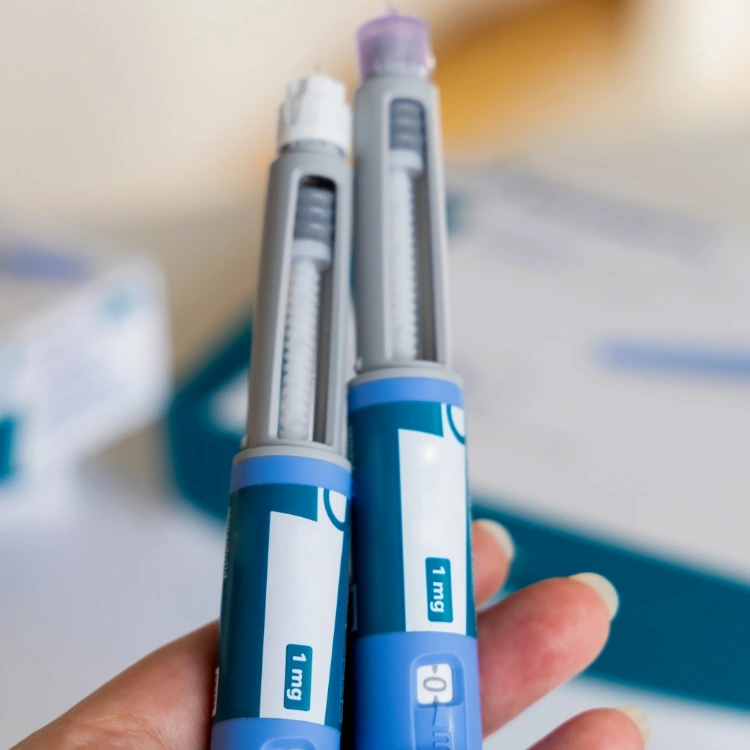
Semaglutide (Wegovy®)
Semaglutide is an FDA-approved GLP-1 receptor agonist for chronic weight management. It works by activating GLP-1 receptors in the brain that control appetite and food intake, helping you feel full with less food and reducing the constant mental noise around eating that so many patients describe.
In clinical trials, patients taking semaglutide lost an average of approximately 15% of their body weight over 68 weeks. It’s administered as a once-weekly self-injection using a prefilled pen. Most patients say it takes less than a minute and becomes routine quickly.
Semaglutide is FDA-approved for adults with a BMI of 30 or higher, or a BMI of 27 or higher with at least one weight-related health condition such as type 2 diabetes, high blood pressure, or high cholesterol.
Tirzepatide (Zepbound®)
Tirzepatide is the newest FDA-approved weight loss medication and represents the next generation of injectable treatments. Unlike semaglutide, which targets one hormone pathway, tirzepatide is a dual GIP/GLP-1 receptor agonist, meaning it activates two separate hormone systems involved in appetite regulation and metabolism.
The clinical trial results for tirzepatide have been remarkable. Patients lost an average of 20–25% of their body weight, with some participants losing even more. Like semaglutide, it’s a once-weekly self-injection, and it carries the same BMI qualification criteria.
Our clinical team will evaluate your health history, current medications, and weight loss goals to determine whether semaglutide, tirzepatide, or another approach is the best fit for your body.
Phentermine & Other Oral Medications
GLP-1 injectables aren’t the only tool in our medical weight loss program. Depending on your health profile, our clinical team may recommend oral medications such as phentermine, topiramate, or combination therapies. Some patients do best with a single medication; others benefit from a combination approach. The right plan depends on your body, your medical history, and how you respond to treatment — and that’s exactly what the initial consultation is designed to determine.

Do I Qualify for Medical Weight Loss?
If you’ve been struggling to lose weight despite real effort or if you’ve lost weight before only to gain it back, you’re not alone. Medical weight loss may be the right next step. You may be a good candidate if:
- Your BMI is 30 or higher
- Your BMI is 27 or higher and you have a weight-related health condition like type 2 diabetes, high blood pressure, high cholesterol, or sleep apnea
- You’ve tried structured diets and exercise programs without achieving lasting results
- You’re not ready for or don’t qualify for bariatric surgery but need more than lifestyle changes alone
- You’ve had bariatric surgery in the past and are experiencing weight regain
- You want a physician-supervised program rather than a quick-fix from a med spa or online provider
Not sure where you fall? That’s exactly what the consultation is for. Our clinical team will review your full health picture (not just a number on a scale) and help you understand which options make sense for your situation.
What to Expect at St. Louis Bariatrics
Walking into a weight loss consultation can feel vulnerable. We get that. Here’s exactly what the process looks like so there are no surprises.
Step 1: Your Initial Consultation
You’ll meet one-on-one with a member of our team to talk through your weight loss history, current health conditions, medications you’re taking, and what you’ve already tried. This isn’t a rushed appointment: it’s a real conversation about your health and your goals. Depending on your situation, your provider may order lab work or a physical exam to make sure we have the full picture before recommending a treatment.
Step 2: Your Personalized Treatment Plan
Based on your evaluation, your provider will recommend a specific medication, dosage, and approach tailored to your body based on Dr. Snow’s protocols. You’ll also receive nutritional guidance designed to work alongside your medication. This is not a rigid meal plan, but practical strategies you can actually follow in your daily life.
Step 3: Starting Your Medication
You’ll begin at a low dose and gradually increase over several weeks. This titration process is important: it gives your body time to adjust and minimizes side effects like nausea, which is the most commonly reported issue in the first few weeks. Our team will walk you through exactly how to administer your injection and what to expect as your body adapts.
Step 4: Ongoing Monitoring & Support
This is where most clinics fall short and where we don’t. You’ll have regular check-ins with our team to track your progress, adjust your dosage if needed, manage any side effects, and keep you on track. Medical weight loss isn’t a “here’s your prescription, good luck” situation. It’s an ongoing partnership between you and your provider.
Step 5: Long-Term Maintenance
As you approach your goal weight, the conversation shifts to sustainability. Your provider will work with you on a maintenance strategy, whether that means continuing medication at a lower dose, transitioning off medication with a structured plan, or incorporating other tools to protect the progress you’ve made.
Patient Results

Why Choose a Board-Certified Bariatric Surgeon for Medical Weight Loss?
You can get a GLP-1 prescription from a lot of places right now: primary care offices, telehealth apps, med spas, even some wellness clinics. So why come to a bariatric surgery practice?
Because weight management is all we do.
Dr. Snow is a board-certified bariatric surgeon who has spent his entire career treating obesity. The St. Louis Bariatrics team understands the biology of weight regulation at a level that most prescribers simply don’t, because they’ve treated thousands of patients across the full spectrum: from medication management to complex surgical cases. That depth of experience matters when you’re deciding which medication to start, how aggressively to dose it, how to manage side effects, and what to do if the first approach doesn’t work.
It also matters if your situation changes. If medication alone doesn’t get you where you need to be, you already have a trusted relationship with a surgeon who can walk you through surgical options without starting over at a new practice. And if you’ve already had bariatric surgery and are dealing with weight regain, Dr. Snow and his team understand the unique physiology of post-surgical patients in a way that a general practitioner or med spa provider can’t.
Choosing St. Louis Bariatrics means you’re getting a physician-led team who sees the full picture, not just someone filling a prescription.

Dr. Snow has more than 15 years of surgical experience and has helped transform the lives of over 11,000 patients. He is a board-certified general and bariatric surgeon and a Fellow of the American College of Surgeons and the American Society for Metabolic and Bariatric Surgery.
Dr. Snow earned his medical degree from the University of Missouri School of Medicine in Columbia, Missouri, and completed his general surgery residency at the University of Oklahoma. He then completed a fellowship in bariatric surgery at the Minnesota Institute for Minimally Invasive Surgery, the only fellowship in the country triple-accredited in minimally invasive surgery, bariatrics, and flexible endosurgery.
Dr. Snow currently serves as the Medical Director of the Bariatric Program at Mercy Hospital Jefferson, where he is dedicated to helping patients achieve lasting health and weight-loss success through surgical and non-surgical treatment options.
Compare Weight Loss Options


Minimal
Minimal
Minimal
Non-Invasive
Non-Invasive
65% of excess body weight
75% of excess body weight
48% of excess body weight
Average of 5-16% of total body weight
(Varies by medication)
20-40 pounds total
Fast
Fast
Slower
Slow to Moderate
Slow
Less than 1 hour
2 hours
Less than 1 hour
None
Less than 30 minutes
Out-patient
1 night
Out-patient
None
Out-patient
Yes
Yes
Yes
Yes
No
Yes
Yes
Yes
Yes
Yes
$11,111
$23,500
$16,400
$30,000*
$7,225
*Calculation based on cost for 5 years of medication at $500 per month. Actual out-of-pocket cost would likely be much higher as most people will need to stay on medication long-term.
Medical Weight Loss Cost & Insurance Coverage
We know cost is one of the biggest concerns when considering medical weight loss, especially with GLP-1 medications, which can be expensive without coverage. Here’s what you should know.
Many insurance plans now cover FDA-approved weight loss medications like Wegovy and Zepbound, particularly for patients who meet BMI and medical criteria. Coverage varies by plan, and our team will verify your benefits before you start treatment so you know exactly what to expect financially.
For patients without insurance coverage, we can help you explore manufacturer savings programs, patient assistance programs, and self-pay options. We’ll always be upfront about costs: no hidden fees, no surprises.
The initial consultation is typically covered by your insurance company.
Don’t let uncertainty about cost keep you from making the call. Our team handles the insurance verification. You just need to show up.
Call (314) 366-4874 to Check Your Coverage
Frequently Asked Questions About Medical Weight Loss
How much weight can I lose with GLP-1 medications?
Results vary from person to person, but clinical trials offer a good benchmark. Patients taking semaglutide (Wegovy) lost an average of approximately 15% of their body weight, while patients taking tirzepatide (Zepbound) lost an average of 20–25%. Your results will depend on factors like your starting weight, how well you respond to the medication, and the lifestyle changes you make alongside treatment. Your provider will set realistic expectations based on your specific situation during your consultation.
How long do I need to take weight loss medication?
There’s no single answer: it depends on your goals, your progress, and how your body responds. Some patients use GLP-1 medications for a defined period to reach their goal weight and then transition to a maintenance strategy. Others benefit from longer-term use. The research shows that many patients regain weight after stopping GLP-1 medications, which is why our program is built around long-term planning, not just a prescription endpoint.
What are the side effects of semaglutide and tirzepatide?
The most common side effects are gastrointestinal: nausea, mild stomach discomfort, and occasional constipation or diarrhea. For most patients, these are mild and improve significantly within the first few weeks as the dose gradually increases. Starting at a low dose and titrating slowly is specifically designed to minimize these effects. Our team monitors every patient closely during the titration phase and can adjust your plan if side effects are difficult to manage.
Is medical weight loss safe?
Yes. The medications we prescribe are FDA-approved and have been studied extensively in large clinical trials. Beyond that, having your treatment supervised by a board-certified bariatric surgeon adds an additional layer of safety. Our clinical team evaluates your full medical history, monitors for drug interactions, and adjusts treatment based on how your body responds. This is a very different experience from getting a prescription through an app with minimal physician oversight.
Can I use GLP-1 medications after bariatric surgery?
Absolutely. GLP-1 medications can be an effective tool for patients who have had gastric sleeve, gastric bypass, or lap band surgery and are experiencing weight regain. Dr. Snow and his staff have extensive experience treating post-surgical patients and understands the unique considerations involved, including how these medications interact with your altered anatomy.
Do you prescribe compounded semaglutide?
No. St. Louis Bariatrics only prescribes FDA-approved, brand-name medications. Compounded semaglutide is not FDA-approved, is not subject to the same manufacturing and safety standards, and has been linked to serious adverse events. Your safety is not worth the savings. Learn more about the risks of compounded semaglutide →
What’s the difference between Wegovy and Zepbound?
Both are injectable weight loss medications, but they work differently. Wegovy (semaglutide) targets GLP-1 receptors, while Zepbound (tirzepatide) targets both GLP-1 and GIP receptors. In clinical trials, tirzepatide produced greater average weight loss, but the best medication for you depends on your health profile, insurance coverage, and how your body responds. Your provider will help you make the right choice based on your health profile and coverage.
How is this different from getting weight loss medication from a med spa or telehealth app?
The biggest difference is the depth of medical expertise and the continuity of care. At St. Louis Bariatrics, your treatment is managed by our clinical staff who are overseen by a board-certified bariatric surgeon. Your provider will conduct a thorough medical evaluation before prescribing anything, monitor your progress over time, adjust your treatment as needed, and can offer the full spectrum of weight loss solutions should your needs change. A med spa can write a prescription. We build a plan.
Does insurance cover medical weight loss?
Many plans do, but coverage varies. Our team will verify your insurance benefits before your first appointment so you know what’s covered. We also help patients access manufacturer savings programs and patient assistance programs when insurance coverage is limited.
What if medication doesn’t work for me?
That’s one of the biggest advantages of working with a bariatric surgeon. If medication alone doesn’t achieve your goals, Dr. Snow can discuss surgical options like gastric sleeve or gastric bypass, or a combined approach using both medication and surgery. You won’t need to start over at a new practice or explain your history to a new doctor. You’re already in the right place.

Start Your Medical Weight Loss Journey in St. Louis
You don’t have to keep doing this alone: cycling through diets that don’t last, fighting against a body that seems to work against you, wondering if anything will actually work this time. Medical weight loss is real medicine for a real medical condition, and it works.
At St. Louis Bariatrics, our team, trained under Dr. Snow’s protocols, will build a plan around your body, your health, and your life. Whether GLP-1 medication is the right first step or part of a broader strategy, it starts with a conversation.
Call (314) 366-4874